Saturday, December 29, 2012

What is Social Media Optimization?

Social Media Optimization

When you understand what social media are, it’s not a far step from there to social-media optimization. It’s about using social media to spread the news about your web site. And instead of tweaking the elements of your web site, when you’re practicing social-media optimization you’re participating in social networks and tweaking the content that you share within those networks.
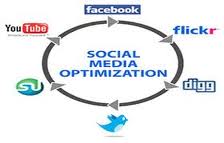

It’s through that participation and optimization that your site is distributed, and that’s what brings traffic to your web site. There are also a couple of added benefits to social-media optimization. First, it’s free in terms of monetary investment. There is no cost to participate in these networks except your time. But make no mistake about it, you will have to invest a chunk of front-end time into this type of optimization. You must become familiar with the communities and participate to establish a name for yourself before anyone will take serious notice of you.

The other benefit of social-media optimization is that it’s really a viral marketing strategy. Nearly everyone is familiar with a virus. It’s that nasty little bug that multiplies exponentially and makes you believe death would be an improvement. Viral marketing is neat, not nasty, but it works in a somewhat similar way.

When you can tap viral marketing for your online presence, word of your brand spreads like a virus — it moves faster and faster as the buzz increases, and there doesn’t seem to be any way to stop it. And that’s good. If your marketing message has become viral, you can expect to see some serious growth in the number of visitors to your site and by extension to the number of goal conversions that you see.

Viral marketing is a good thing. And when you’ve optimized your social-media participating, you can almost guarantee that your marketing will soon have that viral quality that you’re looking for.

Source : Search Engine Optimization Bible by Wiley

Thursday, December 6, 2012

What is SEO Spam?

What Constitutes SEO Spam?

So, if SEO spam is so hard to define, how do you know whether what you’re doing is right or wrong?

Good question. And the answer is that you don’t always know, but there are some guidelines that you can follow that will help you stay out of the spam category. Basic, good web-design practices are your best defense. If you’re handling your web-site search marketing using the guidelines provided by the various search engines you’ll target, you should be in a position not to worry about being classified as a spammer.

Don’t do anything that makes you worry that you’re doing wrong.
It sounds like simple advice, but when you think about it, if you’re doing something on your web site that you have to worry is going to get you banned from a search engine, you probably shouldn’t do it. This includes strategies like using hidden text on your web pages, using doorway pages or cloaking your pages, and creating false link structures. Even if you don’t know that these strategies are banned by search engines, when you consider the sneakiness of the strategy, you’ll be able to tell that it’s not likely a strategy that you should use.

Don’t make your web site appear to be something that it’s not.
It’s easy to “put a spin” on something to make it appear more attractive than it really is. People do it all the time where products and services are concerned. But using that same strategy on your web site may get you banned. Creating false link structures is one way you might make your site appear more popular than it really is. The problem with using that strategy is that it won’t take a crawler long to figure out that all of those sites are interconnected.

Don’t trust someone who says that a certain practice is acceptable, if you even suspect that it’s not.
Some unethical SEO people will tell you that it’s okay if you use certain obvious spam techniques as long as you use them correctly. Wrong. Spam is spam. It doesn’t matter how you use it, the search crawler will still see it as spam and you’ll still pay the consequences, while the unethical SEO consultant will take the money and leave you in the crawler’s bad graces.

Source : Search Engine Optimization Bible by Wiley

Thursday, November 22, 2012

SEO Tools for better Internet marketing

SEO Tools

There are certain SEO Tools that helps to know the number of visits, ROI (Return on Investment), bounce rate, new online customers, SERP (Search Engine Result page), etc. This helps to monitor the SEO campaign for better optimization. Below is the list of SEO tools which helps to find the complete details of the website and its promotion.


Traffic Travis : Market Research SEO and PPC optimization tool


Backlink Watch : Backlink Checker

Quantcast : Website Evaluation Tool

SEO For Firefox : Page Ranking Extension for Firefox

Goingup : Document and Image Converter

SEO Monitor : Video and Audio Format Converter

Sitemapdoc : Google Sitemap Generator and Editor

Automapit : Sitemap Creation Service
GWebCrawler & Google Sitemap Creator : Source Code Web Indexing Engine
Free Online Sitemap Generator : Online sitemap creation

Sitemapxml : XML Sitemap Generator

Brokenlinkcheck : Broken link check 

Broken Link Checker : Link broken checker

W3C Link Checker : Link Checker


Keyword Pad : Keyword List Generator

Primitive Word Counter : Keyword Density Calculator

Keyword Analyzer : Tool for keyword gathering and result estimation

Xedant Keyword Harvester : Keyword Harvest Tool

Google Keyword Tool : Free Keyword Tool

Keyword Density Analyzer : Keyword Density and Word Depth Calculator

Niche Watch : Niche Keywords Research

Google Suggest Keyword Suggestion : Keywords Suggestion Tool

Free Keyword Suggestion : Keywords vs Search Volume Estimator 

Keyword Suggestion and Keyword Popularity Tool : Keyword Suggestion along Popularity

Google Semantics : Firefox Add-on

Alexa Toolbar : Free alexa tool

Search Status : Firefox Toolbar Extension 

Meta Tags : Firefox Sidebar Add-on for SEO

Web Developer : Firefox, Flock, Seamonkey Extension

Web Tools : Ranking and related Tools

Pagerank Lookup : Page Rank Checker

Rank Tracker : Search Engine Ranking Tool

Check Google Pagerank : Positioning Estimation Tool

Google Ranking : Ranking Tool for popular Search Engines

SEO Rank Tool : Ranking and Backlink Tool

Rank Checker : Ranking Checking Tool for Firefox

Gorank : Professional SEO Ranking Tool

Alexa Site Information : Website Monitoring Tools

Sitemeter : Real Time Reporting Tool

Traffic Estimator : Google Traffic Estimation Tool

Social Poster : Social Bookmarking Tool

Google Analytics : website traffic

Social Maker : Social Bookmarking and Promotion Tool

Website Optimizer : Website Testing and Optimization Tool

Web Page Analyzer : Website speed Test

Copyscape : Website dupicate content checker

Search Engine Spider Simulator : Spider Simulation Tool

Web Page Analyser : Web Page Analyser gives a report on the good, and the bad points of the page in SEO terms

Builtwith : Website Optimizer

Xml Sitemaps : Sitemap Generator

Thursday, November 8, 2012

How to Handle Google Penguin Algorithm Change

Google Penguin Algorithm Change 

Google Penguin: Putting Link Abusers On Ice

What it is: First announced on April 24, 2012, the Penguin update was "huge," Meyers says. Unlike previous algorithm updates, he adds, Penguin was more punitive, as opposed to simply being designed to improve search quality.

Google named its new algorithm Penguin. Initially, it affected about 3.1 percent of English-language search queries, according to Search Engine Land. Penguin sought to decrease rankings for websites that engaged in dubious link exchanges, unnatural links, relied on too many of the same anchor text links and so on. (Anchor text links are hyperlinks that contain a targeted keyword phrase.) 
 
Google's goal: With Penguin, Google is cracking down on a common black hat SEO practice: abusing links to gain search engine rankings. If you paid for links from lots of dubious, low-quality link directories, link exchanges and other sites, you may have felt the Penguin slap. 

What you should do: Penguin has already been updated twice and is likely to updated again soon, Meyers says. As a result, it's more important than ever to have link quality and diversity. Earn "natural" links from a variety of other quality sites because you've posted compelling, useful content. 

News: Google Begins Penalizing Search "Over-Optimization"News: Copyright Removal Requests to Affect Google Search Ranking

Don't focus on getting links from other sites using identical anchor text. "Look at where your links are coming from using Google Webmaster tools and what the anchor text links are," says Ting-Yu Liu, Covario's manager of paid media services. "Try to have at least 60 percent keyword diversification. If you have 80 percent of external sites linking to you with the same anchor text, that's a problem."

How to Handle Google Panda Algorithm Change?

Google Panda: Putting Content Farms Out to Pasture

What it is: In February 2011, Google rolled out a major new algorithm. It was called "Farmer" because it was targeted at demoting high-volume content farms in Google search results. The update eventually became known as Panda, a reference to the name of Google engineer Navneet Panda. Since February 2011, Google Panda has been updated 20 times, Meyers says.

The initial Panda update reportedly affected the rankings of nearly 12 percent of all search results, according to the Search Engine Land blog.

Google's goal: Panda was designed to push down sites that are overly optimized, offer "thin" content and/or operate as content farms, explains Michael Martin, SEO manager at Covario, a global search marketing agency. (A content farm produces large amounts of content specifically to attract traffic from search engines and use those page views to generate easy advertising revenues.)

Meyers gives as an example a pest control service, operating nationwide, which may have created a specific Web page for every U.S. city in which it operates. The content on those pages is nearly identical except for the different geographic locations. With Panda, Google's search technology is better able to identify nearly duplicate content like that, recognize that those pages offer no real value to its users and push that content way down in search result rankings.

What you should do: Don't create content simply based on keyword optimization or post thousands of pages with nearly duplicate content. If you do, Google is likely to push down your entire site in its rankings, Meyers advises. Instead, make sure your site's content is as unique as possible and that it adds reader value. Ask yourself: "What does my content do for people who find it?" Does it help them, educate them or engage them in some way?

News: Google to Punish Sites with Many Ads At the Top of Pages
Sometimes, duplicate content is part of what a company legitimately offers. A large publishing company, for instance, may publish the same article on multiple sites it owns. In those cases, to avoid a Google penalty, publishers should properly identify the parent content and make sure others use rel=canonical to point back to the original content, Martin says. (You can learn more at the Google Webmaster Tools' rel=canonical tutorial.)

Friday, November 2, 2012

Types of Pay Per Click Marketing Campaigns

Types of Pay Per Click Programs

Pay-per-click programs are not all created equal. When you think of PPC programs, you probably think of keyword marketing bidding on a keyword to determine where your site will be placed in search results. And that’s an accurate description of PPC marketing programs as they apply to keywords. However, there are two other types of PPC programs, as well. And you may find that targeting a different category of PPC marketing is more effective than simply targeting keyword PPC programs.

Keyword pay-per-click programs:

Keyword PPC programs are the most common type of PPC programs. They are also the type this book focuses on most often. As known, keyword PPC programs are about bidding on keywords associated with your site. The amount that you’re willing to bid determines the placement of your site in search engine results.
In keyword PPC, the keywords used can be any word or phrase that might apply to your site. However, remember that some of the most common keywords have the highest competition for top spot, so it’s not always advisable to assume that the broadest term is the best one. If you’re in a specialized type of business, a broader term might be more effective, but as a rule of thumb, the more narrowly focused your keywords are, the better results you are likely to have with them.

Search PPC marketing programs such as those offered by vendors like Google.com, Yahoo.com, Search Marketing, and MSN.com are some of the most well-known PPC programs.

Product pay-per-click programs

You can think of product pay-per-click programs as online comparison shopping engines or price comparison engines. A product PPC program focuses specifically on products, so you bid on placement for your product advertisements.

The requirements for using a product PPC program are a little different from keyword PPC programs, however. With a product PPC, you must provide a feed, think of it as a regularly updated pricelist for your products, to the search engine. Then, when users search for a product your links are given prominence, depending on the amount you have bid for placement. However, users can freely display those product listings returned by the search engine in the order or price from lowest to highest if that is their preference. This means that your product may get good placement initially, but if it’s not the lowest-priced product in that category, it’s not guaranteed that your placement results will stay in front of potential visitors.

Some of these product PPC programs include Shopping.com, NexTag, Pricegrabber.com, and Shopzilla.com.

Service pay-per-click programs

When users search for a service of any type, such as travel reservations, they are likely to use search engines related specifically to that type of service. For example, a user searching for the best price for hotel reservations in Orlando, Florida, might go to TripAdvisor.com. Advertisers, in this case hotel chains, can choose to pay for their rank in the search results using a service PPC program.

Service PPC programs are similar to product PPC programs with the only difference being the type of product or service that is offered. Product PPC programs are more focused on e-commerce products, whereas service PPC programs are focused on businesses that have a specific service to offer.

Service PPC programs also require an RSS feed, and even some of the same attribute listings as product PPC programs. Some of the service PPC programs you might be familiar with are SideStep.com and TripAdvisor.com.

Source : Search Engine Optimization Bible by Wiley

Wednesday, October 31, 2012

How Pay Per Click Works

What is Pay Per Click?

Pay-per-click marketing is an advertising method that allows you to buy search engine placement by bidding on keywords or phrases. There are two different types of PPC marketing.

In the first, you pay a fee for an actual SERP ranking, and in some cases, you also pay a per-click fee meaning that the more you pay, the higher in the returned results your page will rank.

The second type is more along true advertising lines. This type of PPC marketing involves bidding on keywords or phrases that appear in, or are associated with, text advertisements. Google is probably the most notable provider of this service. Google’s AdWords service is an excellent example of how PPC advertisements work

PPC advertisements are those advertisements that you see at the top and on the sides of search pages.

Putting pay-per-click to work:

Now you can begin to look at the different keywords on which you might bid. Before you do, however, you need to look at a few more things. One of the top mistakes made with PPC programs is that users don’t take the time to clarify what it is they hope to gain from using a PPC service. It’s not enough for your PPC program just to have a goal of increasing your ROI (return on investment). You need something more quantifiable than just the desire to increase profit. How much would you like to increase your profit? How many visitors will it take to reach the desired increase?

Let’s say that right now each visit to your site is worth $.50, using our simplified example, and your average monthly profit is $5,000. That means that your site receives 10,000 visits per month. Now you need to decide how much you’d like to increase your profit. For this example, let’s say that you want to increase it to $7,500. To do that, if each visitor is worth $.50, you would need to increase the number of visits to your site to 15,000 per month. So, the goal for your PPC program should be “To increase profit $2,500 by driving an additional 5,000 visits per month.” This gives you a concrete, quantifiable measurement by which you can track your PPC campaigns.

Once you know what you want to spend, and what your goals are, you can begin to look at the different types of PPC programs that might work for you. Although keywords are the main PPC element associated with PPC marketing, there are other types of PPC programs to consider as well.

Source : Search Engine Optimization Bible By Wiley